---
title: Køge Huskors - Det hjemsøgte hus
description: Historien om Køge Huskors
---
[Skip to content](https://mystoryplace.dk/en/11#main-content)
[](https://mystoryplace.dk/?hsLang=en)
- [Bliv et Story Place](https://mystoryplace.dk/priser)
- [For byer og områder](https://mystoryplace.dk/for-byer)
- [Sådan fungerer det](https://mystoryplace.dk/sådan-virker-det)
- [Om My Story Place](https://mystoryplace.dk/om-my-story-place)
- [Kontakt](https://mystoryplace.dk/kontakt)
- [Bliv et Story Place](https://mystoryplace.dk/priser)
- [For byer og områder](https://mystoryplace.dk/for-byer)
- [Sådan fungerer det](https://mystoryplace.dk/sådan-virker-det)
- [Om My Story Place](https://mystoryplace.dk/om-my-story-place)
- [Kontakt](https://mystoryplace.dk/kontakt)
English
- [Deutsch](https://mystoryplace.dk/de/11)
- [Dansk - Danmark](https://mystoryplace.dk/11)
- [English](https://mystoryplace.dk/en/11)
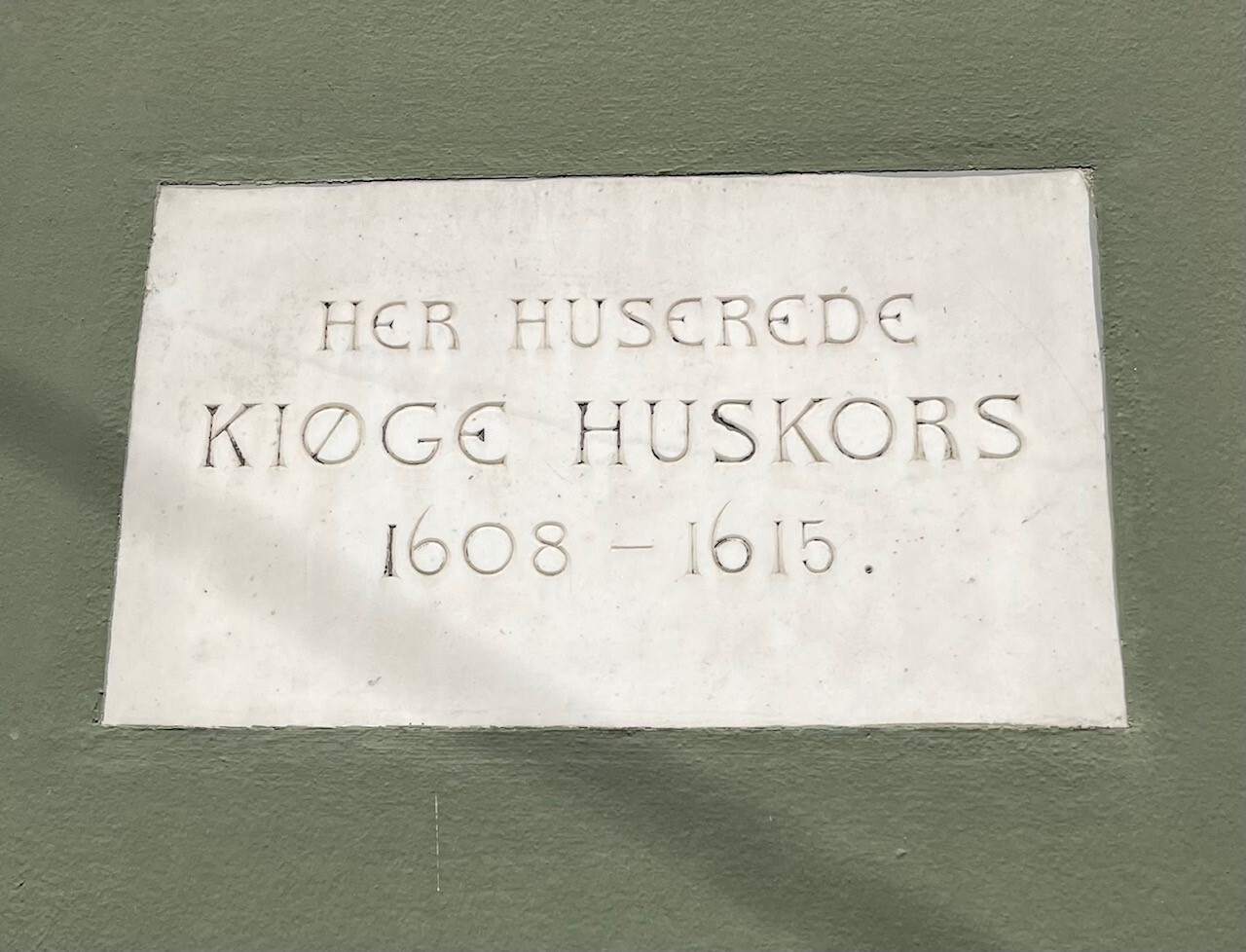
## Haunted for four years
In 1608, strange events began to occur in the house on the corner of Køge Square, owned by the Bartskær family. The family suddenly heard hens clucking – even though they did not own any. Two of the children fell ill, a third suffered convulsions, and the man of the house felt as if he were being crushed by a large heavy sack whenever he lay down to sleep.
One day, Hans became enemies with a woman from the town, Johanne Thomesis. It was not long before Hans and his wife Anna became convinced that Johanne was the cause of all their misfortune. In 1612, they accused Johanne of witchcraft and of bringing the devil into their home.
[Experience the Witch Exhibition at Køge Museum](https://museerne.dk/pages/koege-museum-besat)
## Fire and flames
The many witch trials later became known as the *Køge Huskors*, named after the handwritten account left by Anna Bartskær. Johanne was the first of the condemned women to be thrown into the dungeon beneath Køge Town Hall, which later became known as the *Troldkonekælderen* (the Witch Cellar). This had far‑reaching consequences. Once a woman had been accused and sentenced, it became legal to use torture to force her to reveal accomplices.
At the same time, King Christian IV was intensifying his efforts to purge his kingdom of witches. If found guilty of witchcraft, the punishment was “fire and flames,” and from 1612 to 1615, a total of 16 women in Køge were accused of witchcraft – making it the largest witch trial in Danish history. The memorial plaque commemorating the events was installed in 1911 in connection with the inauguration of Køge Museum – as a reminder of what fear can do to a society.
### More stories from Køge
[](https://mystoryplace.dk/en/12?hsLang=en)
**The escape from the dungeon**
[](https://mystoryplace.dk/en/13?hsLang=en)
**Denmark's oldest town hall**
[](https://mystoryplace.dk/en/16?hsLang=en)
**From merchant's house to museum**
#### My Story Place ApS
[+45 23 60 50 39](tel:+4523605039)
[info@mystoryplace.dk](mailto:info@mystoryplace.dk)
CVR: 37905224
[Terms of Service](https://26830004.hs-sites-eu1.com/terms-of-service?hsLang=en)
[](https://mystoryplace.dk?hsLang=en)
Gemte fortællinger
-
-
-
#### Links
[Forside](https://26830004.hs-sites-eu1.com/forside?hsLang=en)
Bevar historien
[Projektaftale](https://26830004.hs-sites-eu1.com/produkter-og-service?hsLang=en)
[Om My Story Place](https://26830004.hs-sites-eu1.com/om-my-story-place?hsLang=en)
[Kontakt](https://26830004.hs-sites-eu1.com/kontakt?hsLang=en)
[Login](https://profil.mystoryplace.dk/)
Copyright © 2023 My Story Place ApS All Rights Reserved.
[Privatlivspolitik |](https://mystoryplace.dk/privatlivspolitik?hsLang=en) [Cookiepolitik](https://mystoryplace.dk/cookiepolitik?hsLang=en)