Køge’s natural centre
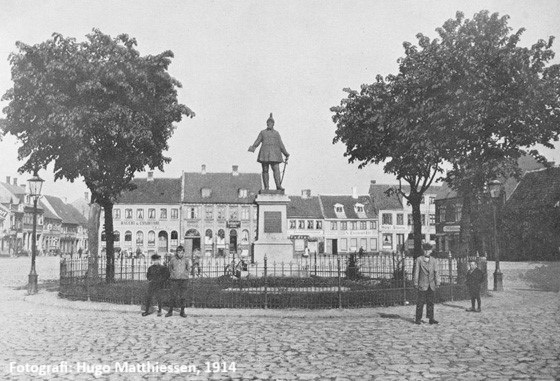
The square has always been Køge’s natural centre. Here, people traded, shouted, haggled over prices, and sold livestock, grain, fish, and schnapps. And the tradition lives on: every Wednesday and Saturday, the square is still filled with market traders and locals – just as it was 800 years ago.
Around 1824, the paving of the square was completed with the help of voluntary labour from the town’s citizens and surrounding farmers, as the municipal treasury was empty after the state bankruptcy in 1813. The open gutters were filled with around 1,000 loads of gravel, donated by Gammel Kjøgegaard. On Saturday, June 5th, 1869, around 10,000 people took part in a Constitution Day celebration here on the square to unveil a monument to the giver of the constitution, King Frederik VII.